








Discover the Puligny-Montrachet appellation
and its cuvée des Hospices de Beaune
Cuvée des Hospices de Beaune in the Puligny-Montrachet appellation
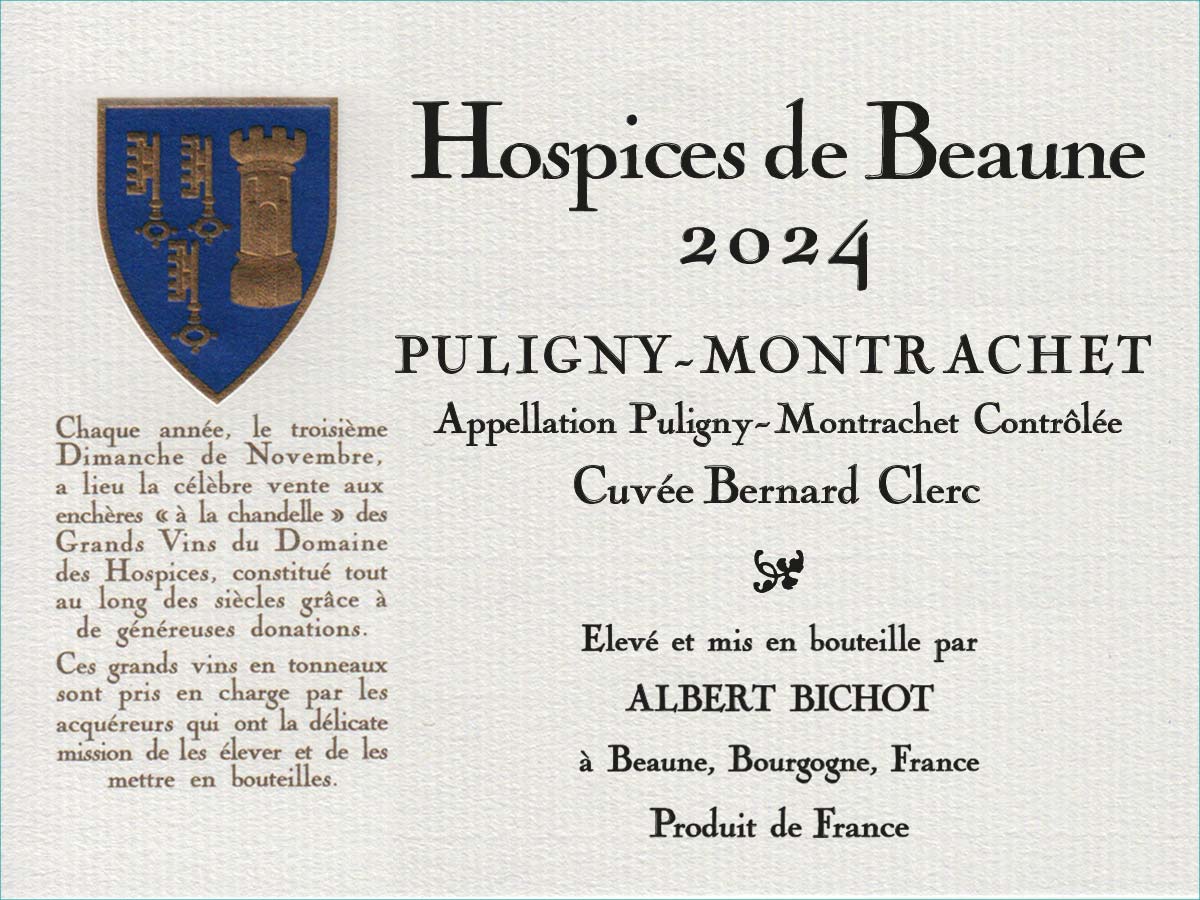
The style of Puligny-Montrachet wines
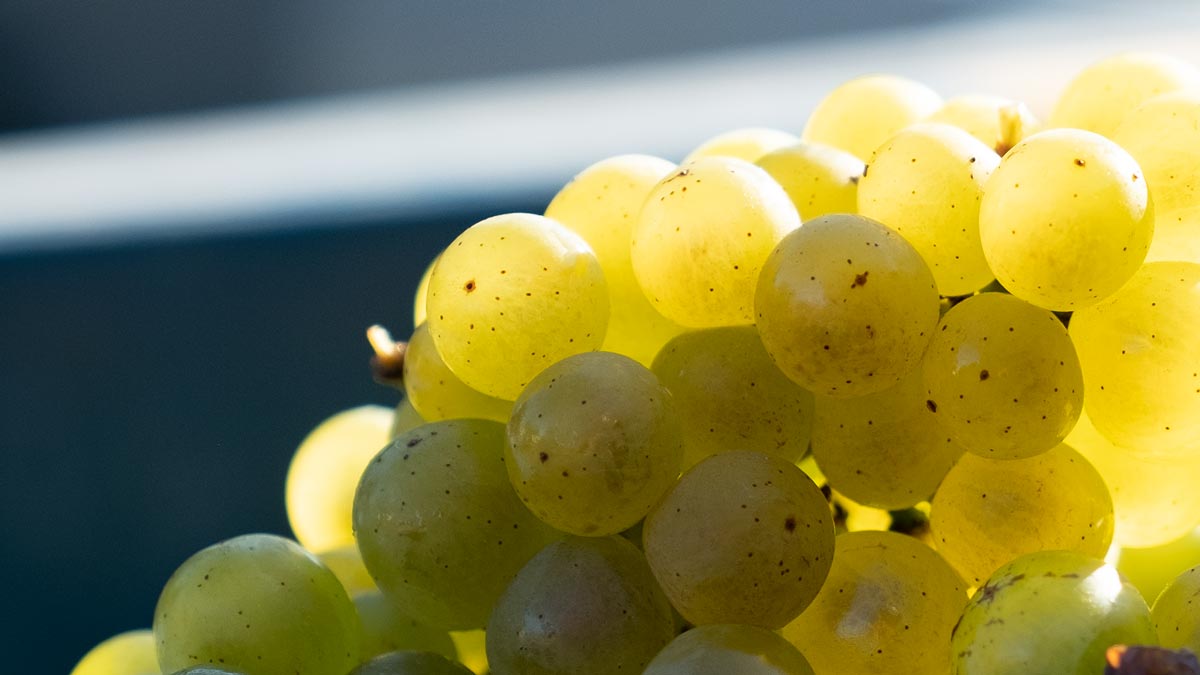
The wines of this picturesque village are among the most elegant and precise expressions of the Côte de Beaune. Chardonnay is justly renowned for its purity, mineral tension and great finesse, vintage after vintage. Puligny wines are often described as straightforward and chiselled.
When young, they develop delicate aromas of citrus, lemon, green apple and white flowers, accompanied by hints of gunflint and fresh almond. Barrel ageing brings subtle nuances, with more pastry-like touches (brioche, vanilla), while remaining generally discreet.
On the palate, Puligny-Montrachet wines are distinguished by a lively, precise attack, a fine texture and a marked chalky minerality. The balance is based on a fine acidic tension that underpins the wine's richness, giving it length, freshness and ageing potential. With age, they evolve towards more complex notes of honey, dried fruit and hazelnut, while retaining their signature straightforwardness and elegance.
Ageing potential: 5 to 10 years, depending on the vintage.
Buy Puligny-Montrachet cuvée Bernard Clerc at the Hospices de Beaune auction with Albert Bichot
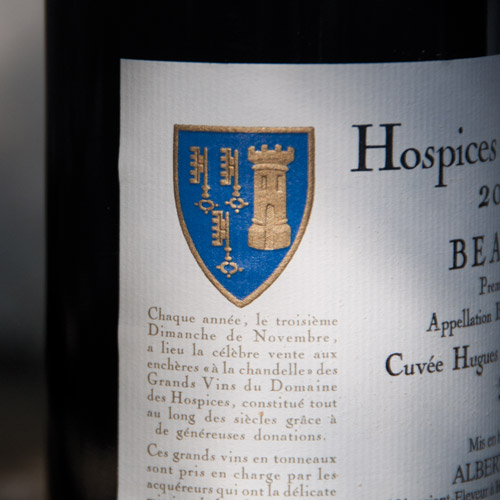
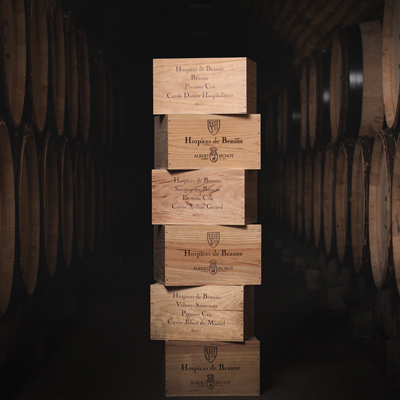
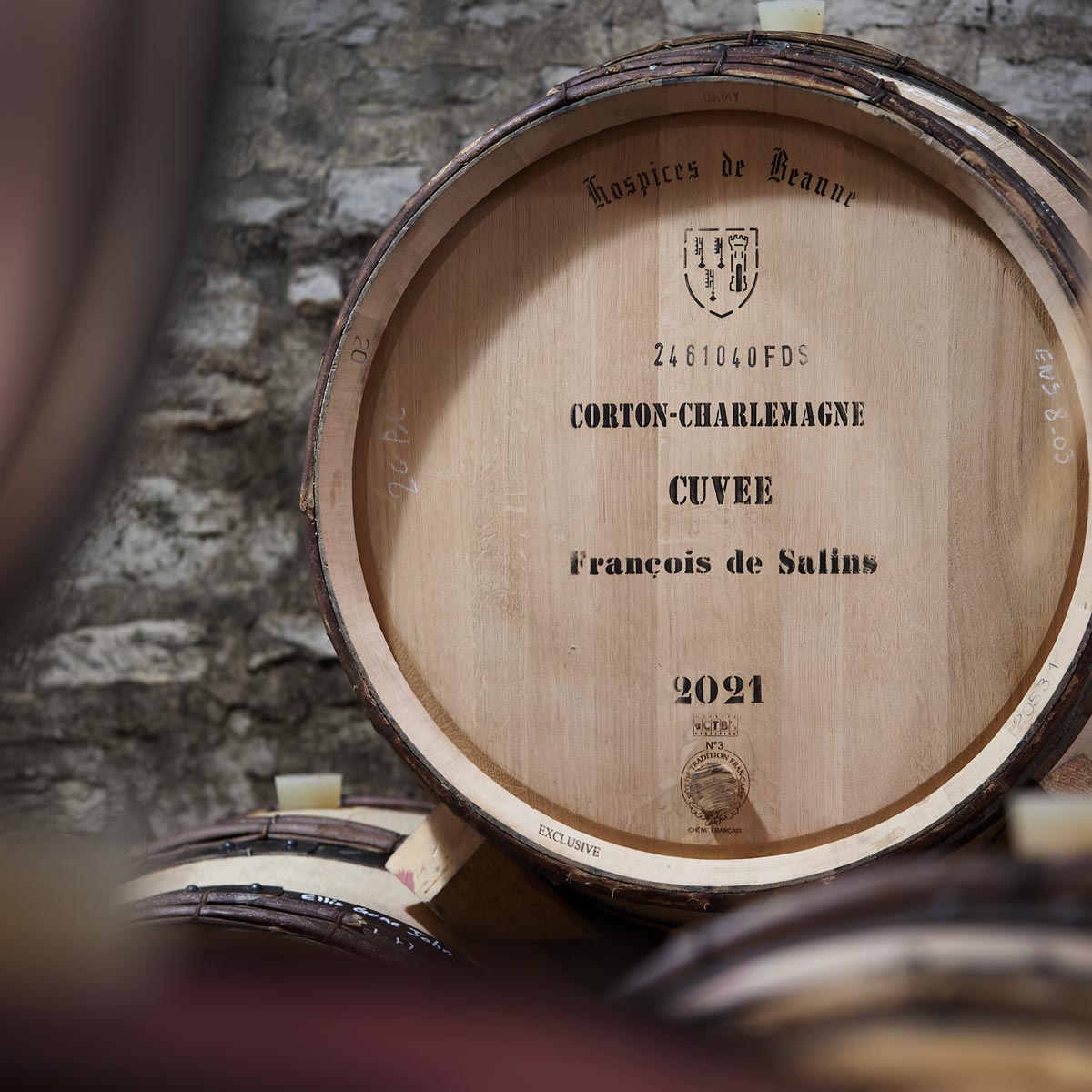
A single cuvée of Puligny-Montrachet(cuvée Bernard Clerc) is on sale at the famous Hospices de Beaune auction held every third Sunday in November. What's more, only one barrel (pièce) is on sale, from the donation of a small parcel in the Les Reuchaux climat. This magnificent parcel was bequeathed in 2017 by winemaker Bernard Clerc, whose name the cuvée bears in tribute.
So you can understand the rarity of this great white Burgundy wine! We've had the pleasure of ageing this exceptional cuvée several times at Albert Bichot for clients. Be the next one!
Option 1 - Buy at the Hospices auction from just 1 bottle with Albert Bichot
Option 2 - Buy a full barrel (or a fraction) at Hospices auction
Puligny-Montrachet: food and wine pairings
The wines from this village, a favorite among lovers of great Bougogne wines, are distinguished by their precision, minerality and elegance. This finesse makes them particularly well-suited to delicate dishes where texture and purity of flavors are highlighted. Cuvée Bernard Clerc is no exception!
- Cream of pumpkin soup with hazelnuts
- Mushroom risotto with parmesan shavings (vegetarian)
- Roasted sea bass - spring vegetables
- Old Comté or Alpine cheese
The terroir of Puligny-Montrachet
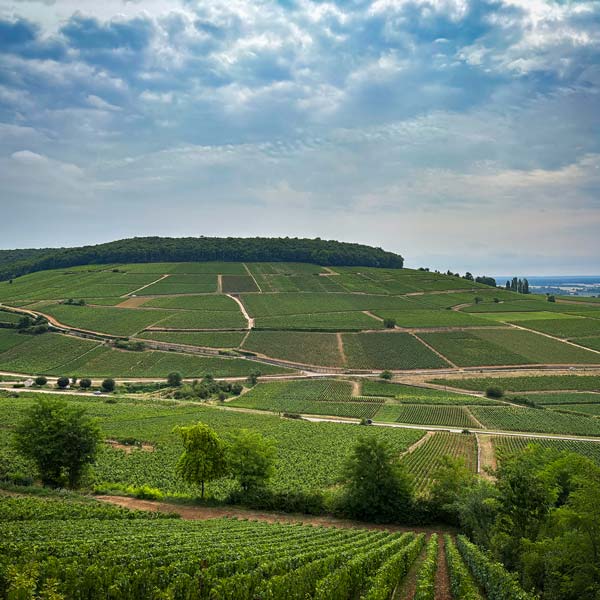
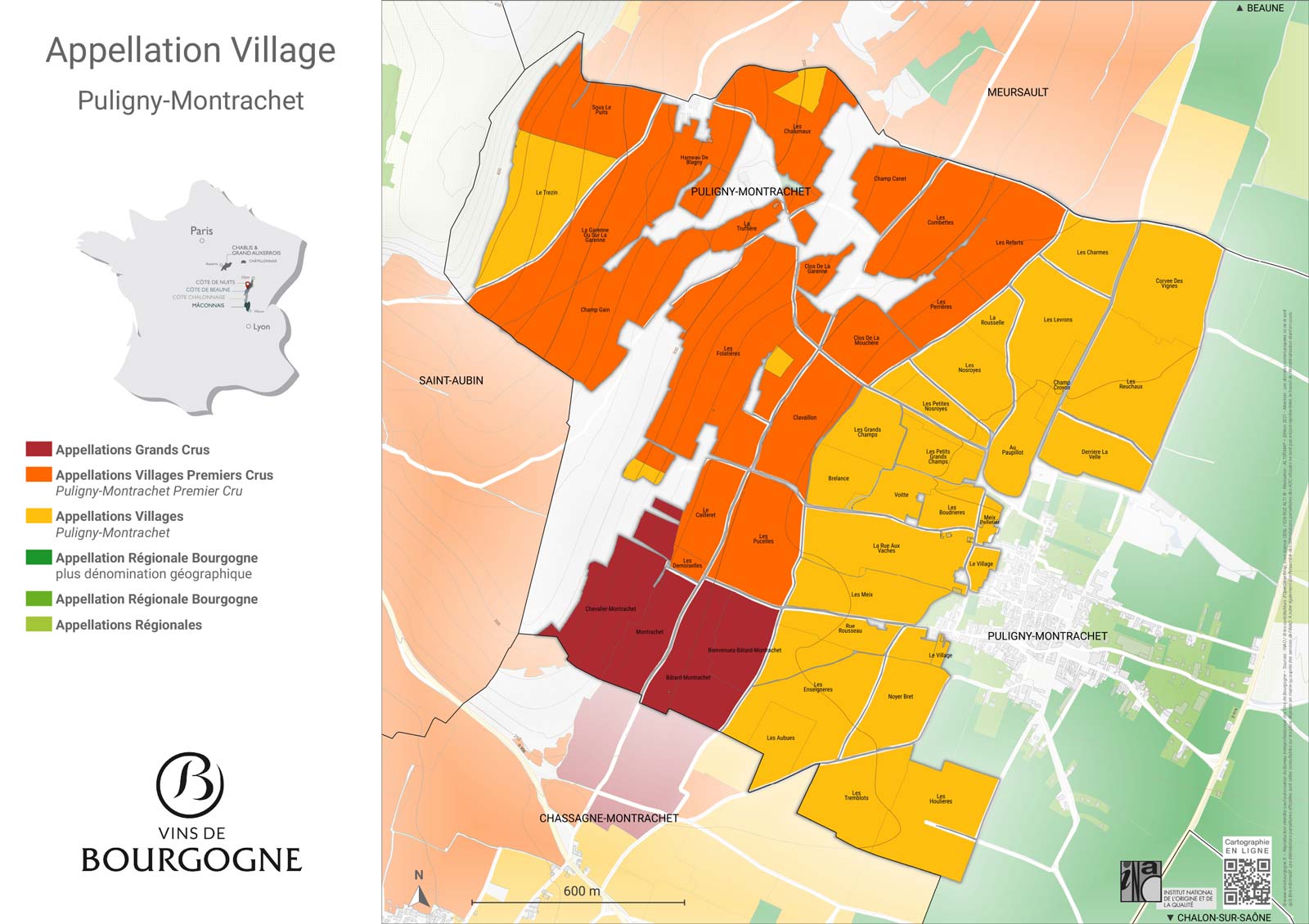
The Puligny-Montrachet vineyard lies in the southern half of the Côte de Beaune, between Meursault to the north and Chassagne-Montrachet to the south. The vines are planted on hillsides facing east and southeast, benefiting from optimum sunshine while being protected from westerly winds by the relief. They are generally situated between 230 and 320 meters above sea level, on even slopes that are ideal for ripening grapes.
The soils of Puligny-Montrachet are mainly composed of Jurassic limestone mixed with light-colored marl and limestone scree from the cliff above the vineyard. The upper slopes are often thin, stony and very draining, while the lower slopes contain more clay and silt. This geological diversity favors a particularly fine expression of Chardonnay, giving rise to wines renowned for their purity, mineral tension and great aromatic precision. It also explains the presence of prestigious Grands Crus, including Montrachet, Chevalier-Montrachet and Bâtard-Montrachet, which are among the most famous terroirs in Burgundy.
The climats of Puligny-Montrachet within the Hospices de Beaune parcel and its cuvées
Parcel located to the north of the Puligny-Montrachet appellation, close to Meursault. On a gentle slope, the soil is stony, well-draining and composed of clay and silt. The soil is generous, as is the wine that comes from it. This cuvée offers elegance, fruitiness and a solid structure on the palate.
- Puligny-Montrachet - Cuvee Bernard Clerc: Les Reuchaux
The appellation map
Etymology & history
The origin of the name Puligny-Montrachet dates back to Gallo-Roman times. The toponym Puligny is said to derive from the Latin name Pullius or Pollius, probably that of a landowner, to which was added the Gallo-Roman suffix -acum designating an estate or rural property. The ancient name Puliniacum or Puligniacum would thus have meant "domain of Pullius", before gradually evolving into Puligny.
The term Montrachet, officially added to the village name in 1879, refers to the famous Grand Cru Montrachet shared with the neighboring village of Chassagne-Montrachet. The etymology of Montrachet comes from the Old French mont rachet or mont chauve, meaning "peeled mountain" or "bare hill", probably due to the absence of trees on this plot historically devoted to vines.
Discover all the appellations of the Domaine des Hospices de Beaune
-
Through these exceptional grands crus, each Hospices bottle tells the story of a unique terroir. With their own distinctive style, these appellations are the realm of the very finest pinot noir.
-
Explore unforgettable flavors, both white and red. Each of these appellations transports you back in time and geography. A mosaic of climates to (re)discover with passion.
-
These treasures perfectly complement the southern and northern Burgundy roots of the Domaine des Hospices de Beaune. Not to be missed!
Key facts about the Puligny-Montrachet appellation
-
- Location : Burgundy > Côte de Beaune
- Creation of the appellation: July 31, 1937
- White wines account for almost the entire AOC, with 205 ha (including 96 ha Premier Cru).
Vintage guide at Hospices de Beaune
Every year is different. Discover its flavour
All appellations at Hospices de Beaune
Great wines born from great terroirs